Types of IOL Lenses: Monofocal vs Toric vs Trifocal (2026 Guide)
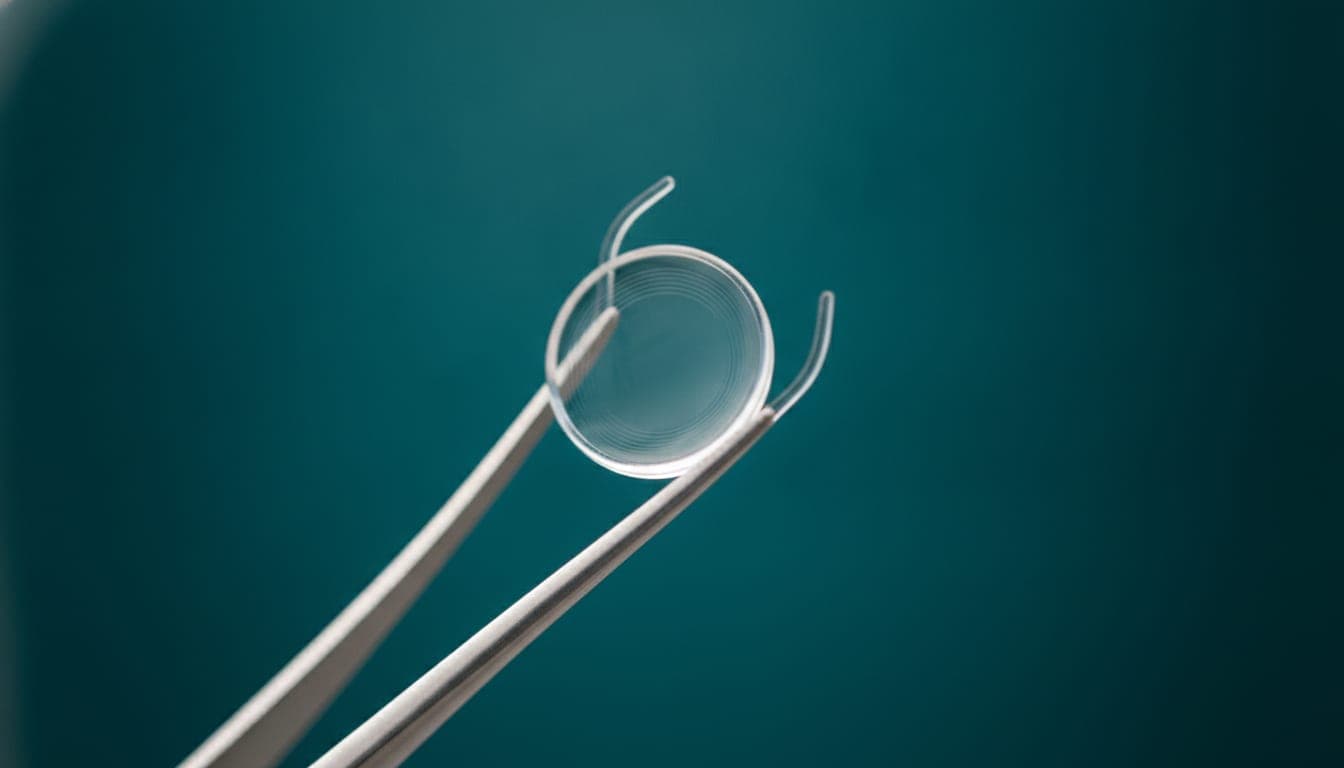
During cataract surgery or lens replacement surgery, the natural lens inside your eye is removed and replaced with an artificial one called an intraocular lens, or IOL. The surgery itself takes about fifteen minutes per eye and the technique is broadly the same whichever lens you choose. The lens is the decision that actually shapes your result.
An IOL is permanent. It does not wear out, it does not need replacing, and exchanging one later is possible but far from routine. Whichever type you choose, you are choosing how you will see for the next twenty or thirty years. That is why it is worth understanding the differences properly rather than picking from a price list.
This guide explains the main types of IOL in plain language: how each one works, what vision you can realistically expect, the trade-offs that are easy to miss, and what each costs.
What is an intraocular lens (IOL)?
Your natural lens sits behind the pupil and focuses light onto the retina. In cataract it becomes cloudy; with age it becomes stiff and loses the ability to focus up close, which is why reading glasses appear in your forties. In both cases the fix is the same: remove the natural lens and implant a clear artificial one.
Modern IOLs are made of foldable acrylic. The surgeon inserts the lens through an incision of around 2 millimetres, and it unfolds into position inside the natural lens capsule, where it stays permanently. No stitches are usually needed and the eye heals within days.
Because the artificial lens cannot change shape the way a young natural lens does, it cannot focus at every distance on demand. Every IOL design is an answer to that one problem, and each answer involves a different compromise.
Monofocal IOL
The monofocal lens has a single focal point. It is the most widely implanted IOL in the world and the benchmark against which every other design is measured.
How it works
All the light passing through the lens is focused at one distance. In practice that distance is almost always set for far vision, so driving, television and walking outdoors are sharp without glasses. Anything close, a book, a phone, a price label, will be blurred, and you will wear reading glasses for it.
What to expect
Excellent, clean distance vision with high contrast. Because all the available light goes to a single focal point, monofocal lenses give the crispest image of any IOL type and produce the fewest visual side effects. Night driving in particular tends to be very good.

Who it suits
- ✓Patients who do not mind wearing reading glasses and simply want the clearest possible distance vision
- ✓People who drive a lot at night, where contrast and freedom from halos matter most
- ✓Patients with other eye conditions such as macular degeneration or advanced glaucoma, where multifocal lenses are usually unsuitable
- ✓Anyone who wants the most predictable result at the lowest cost
Some patients choose monovision: a monofocal set for distance in the dominant eye and for near in the other. It can reduce dependence on reading glasses, but it slightly reduces depth perception and not everyone adapts. It is worth trialling with contact lenses first if your optician can arrange it.
Toric IOL (for astigmatism)
Toric is the most commonly misunderstood term on this list. It is not a third option alongside monofocal and trifocal. It is a variant of either one that also corrects astigmatism.
How it works
Astigmatism means the cornea is shaped more like a rugby ball than a football, so light focuses unevenly and vision is blurred or doubled at every distance. A toric IOL has additional correction built into the lens along one axis, and is rotated to a precise orientation during surgery to cancel out the corneal astigmatism.
Why it matters
If you have significant astigmatism and receive a standard non-toric lens, your vision will remain blurred even though the cataract is gone, and you will need glasses for distance as well as reading. This is one of the more common causes of disappointment after cataract surgery. If your pre-operative measurements show meaningful astigmatism, a toric lens is not an upsell, it is the correct clinical choice.
Toric variants are available for both monofocal and trifocal lenses, so choosing toric does not force you to give up on either sharp distance vision or spectacle independence.
Multifocal IOL
Multifocal is the umbrella term for any lens designed to give useful vision at more than one distance. Trifocal lenses are a type of multifocal lens, which is why the two terms are often used loosely and interchangeably.
How it works
The lens surface carries concentric rings that split incoming light between two or more focal points at once. Your brain learns to attend to whichever image is sharp and to suppress the other. This adaptation, called neuroadaptation, typically takes weeks to a few months.
Bifocal versus trifocal
Earlier multifocal designs were bifocal: they split light between distance and near, with a noticeable gap at intermediate range, which is roughly arm's length. That gap matters more now than it did twenty years ago, because a computer screen, a car dashboard and a supermarket shelf all sit at intermediate distance. Trifocal designs were developed specifically to close it, and have largely replaced bifocals in current practice.
Trifocal IOL
The trifocal lens is the most advanced widely used IOL and the one most often chosen by patients whose priority is life without glasses.
How it works
It splits light between three focal points: far, intermediate and near. In everyday terms that means road signs, a computer screen and a book, all without changing glasses.
What to expect
Most patients achieve good vision at all three distances and use glasses rarely, if at all. Independence is genuine but not absolute: many people still keep weak reading glasses for small print in poor light, or for long stretches of detailed close work.

The trade-off nobody should skip
Because a trifocal divides incoming light three ways, each image receives less light than it would through a monofocal lens. Two consequences follow. Contrast in dim conditions is slightly lower. And a minority of patients see halos or starbursts around headlights and streetlights at night, most noticeably in the first months.

For most people these effects fade as the brain adapts, and satisfaction rates with trifocal lenses are high. But they are real, they are not a sign that anything has gone wrong, and you should hear about them before surgery rather than after. If you drive professionally at night, discuss this frankly with your surgeon; a monofocal or a toric monofocal is often the better choice.
Side-by-side comparison
| Lens type | Distance | Intermediate | Near | Glasses needed? |
|---|---|---|---|---|
| Monofocal | Excellent | Limited | No | Reading glasses always |
| Monofocal toric | Excellent | Limited | No | Reading glasses always |
| Multifocal (bifocal) | Excellent | Weaker | Good | Occasionally |
| Trifocal | Excellent | Good | Good | Rarely |
| Trifocal toric | Excellent | Good | Good | Rarely |
* Typical outcomes. Individual results depend on your eye anatomy, prescription and healing. Your surgeon will set realistic expectations at consultation.
What about EDOF lenses?
You will come across extended depth of focus lenses, usually shortened to EDOF, in your research. Rather than splitting light into distinct focal points, they stretch a single elongated focus across a continuous range. The aim is smoother intermediate vision and fewer halos than a trifocal, at the cost of weaker near vision, so most EDOF patients still need reading glasses for small print.
They are a legitimate design and suit some patients well. For completeness: Clear Sight Abroad implants monofocal and trifocal IOLs, including toric variants of both, and does not offer EDOF lenses. If an EDOF lens turns out to be the right answer for your eyes, we will tell you so at consultation rather than steer you toward something else.
How to choose the right lens for you
The honest answer is that this decision is made properly only after your eyes are measured. Corneal astigmatism, pupil size, retinal health and the condition of the macula all influence which lenses are suitable, and some of them rule options out entirely. What you can usefully do beforehand is get clear about your own priorities.
Questions worth answering before your consultation
- ✓How much do you drive at night, and how much would halos around headlights bother you?
- ✓How many hours a day do you spend at a computer or on a phone? That is intermediate and near vision
- ✓Do you mind wearing reading glasses, or is being free of them the main reason you are having surgery?
- ✓Do you have astigmatism? Check your current glasses prescription for a CYL value
- ✓Do you have any other eye condition, such as macular degeneration, glaucoma or a previous retinal problem?
- ✓Is your budget a constraint, and if so, is it worth prioritising one eye over both?
Questions worth asking your surgeon
- ✓Based on my measurements, which lens types are genuinely suitable for me, and which are not?
- ✓Do I have enough astigmatism to need a toric lens?
- ✓What is your realistic expectation for my spectacle independence with each option?
- ✓How likely am I specifically to notice halos, given my pupil size?
- ✓What happens if I am unhappy with the result, and is lens exchange possible?
IOL prices at Clear Sight Abroad
Prices below are per eye and all-inclusive, covering pre-operative assessment, the surgeon, the lens, the facility, medications and post-operative care.
| Lens type | Cataract surgery | Lens replacement (RLE) |
|---|---|---|
| Monofocal IOL (incl. toric) | from €1,160 | on assessment |
| Trifocal IOL (premium) | from €1,710 | from €1,490 |
| Toric trifocal IOL | from €2,130 | from €1,920 |
* Per eye, all-inclusive. See the full price list for details. Your final quote is confirmed after your pre-operative assessment.
For comparison, a premium trifocal lens in the UK or Ireland typically costs £4,200 to £5,500 per eye, and in the United States $5,000 to $7,000 per eye. The lens itself is identical; what differs is the cost of delivering the surgery. You can read more in our guides to cataract surgery costs in the UK and lens replacement costs across Europe.
Frequently asked questions
What are the main types of IOL lenses?+
The main types are monofocal (one focal point, sharp distance vision, reading glasses needed), multifocal and trifocal (several focal points, aiming for spectacle independence), and extended depth of focus or EDOF (one elongated focus). Toric is a variant available across these types that also corrects astigmatism. Clear Sight Abroad implants monofocal and trifocal IOLs, including toric variants of both.
What is the difference between monofocal and trifocal lenses?+
A monofocal lens focuses light at one distance, usually far, so you see clearly in the distance but need reading glasses. A trifocal lens splits light between far, intermediate and near, so most patients function without glasses at all distances. The trade-off is slightly lower contrast in dim light and a chance of seeing halos around lights at night, which usually fades as the brain adapts.
Which IOL lens is best?+
There is no single best lens. A trifocal is best if your priority is life without glasses and your eyes are otherwise healthy. A monofocal is best if you want maximum contrast and the cleanest night vision, or if you have another eye condition such as macular degeneration. If you have significant astigmatism, a toric version of whichever type you choose is important. The right answer depends on measurements of your eyes.
Do I need a toric lens?+
You need a toric lens if you have clinically significant corneal astigmatism, generally around 1.0 dioptre or more. Without it, vision stays blurred at all distances even after a successful operation. Check the CYL value on your current glasses prescription for an indication, but the decision is made on corneal topography measured before surgery.
Will I still need glasses after lens replacement surgery?+
With a monofocal lens, yes, you will need reading glasses. With a trifocal lens, most patients use glasses rarely or not at all, though many keep weak readers for small print in poor light or for long periods of detailed close work. No IOL can guarantee complete spectacle independence.
Do trifocal lenses cause halos at night?+
A minority of trifocal patients notice halos or starbursts around headlights and streetlights, most obviously in the first months after surgery. For most people the effect diminishes markedly as the brain adapts, and overall satisfaction with trifocal lenses is high. If you drive professionally at night, discuss this with your surgeon, as a monofocal lens may suit you better.
How long does an IOL last?+
An IOL is permanent. It is made of inert acrylic, does not degrade, does not discolour and never needs replacing. Some patients develop clouding of the natural capsule that holds the lens, known as posterior capsule opacification, months or years later. This is common, is not a fault of the lens, and is corrected in a few painless minutes with a YAG laser.
Can an IOL be changed if I do not like it?+
Lens exchange is possible, but it is a more complex operation than the original surgery and carries higher risk, so it is not undertaken lightly. This is precisely why the choice of lens deserves careful discussion beforehand. In practice, most dissatisfaction is resolved through neuroadaptation over several months, or with a small laser or spectacle adjustment rather than exchange.
Ready to find out if you qualify?
Send us your details for a free online consultation. Our English-speaking team will respond within 24 hours.