Premium IOL Lenses: Which Type Is Worth Paying For (2026 Guide)

Somewhere between the first consultation and the quote, the conversation changes. You came in to have a cataract removed or your reading glasses retired, and now you are being asked to choose between a standard lens and a premium one that costs two thousand pounds more per eye. The brochure names a manufacturer, the surgeon mentions a technology, and you are expected to decide.
This guide is about that decision. It explains what the word premium actually refers to, which lens families you are likely to be offered in the UK and what each one is designed to do, what the extra money genuinely buys and what it cannot buy at any price. It also covers the part most articles skip: how to judge the clinic doing the implanting, which affects your result more than the logo printed on the lens box.
We implant monofocal and trifocal lenses, including toric versions of both, so we have an interest here. We have tried to write this so that it remains useful even if you decide to have your surgery down the road from where you live.
What premium actually means on a UK quote
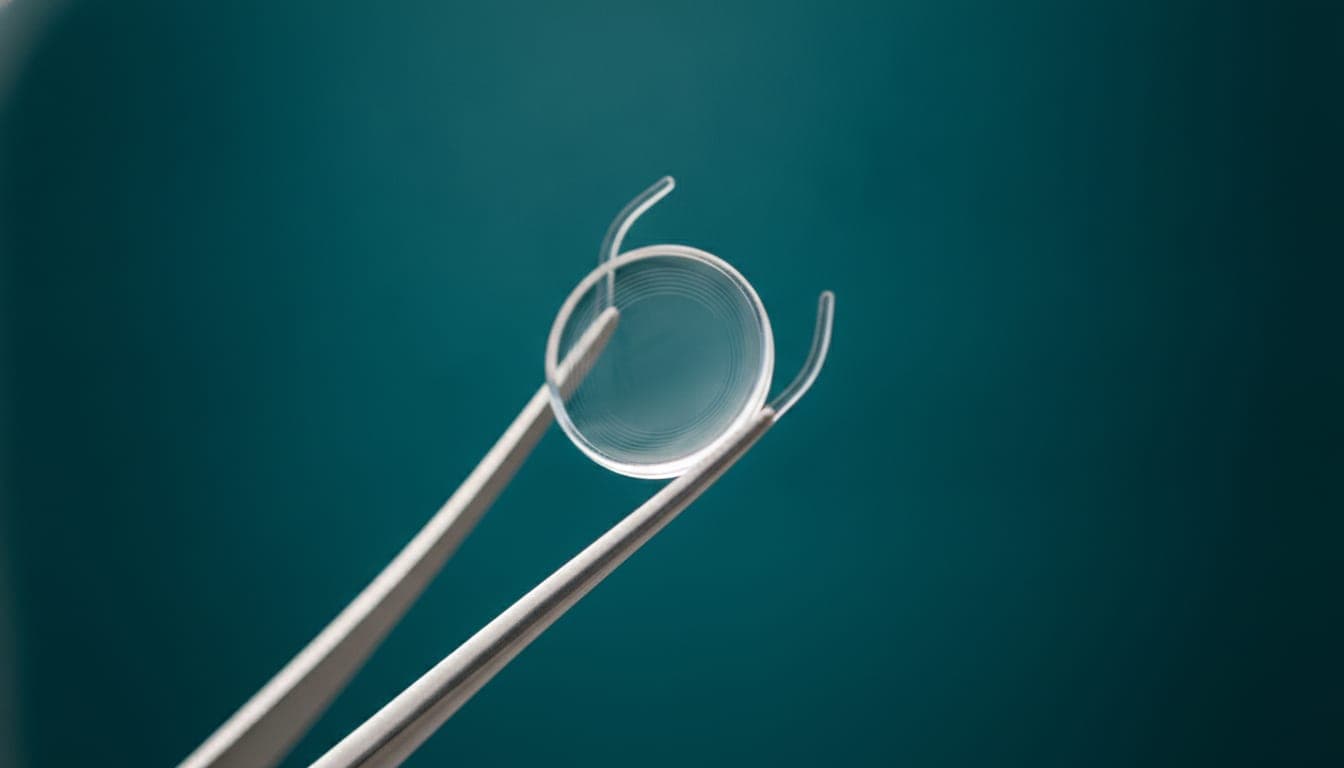
Every intraocular lens sold in the UK or the EU carries a CE mark, is made from the same families of medical-grade acrylic, and is expected to sit in your eye for the rest of your life without degrading. A standard monofocal lens is not a budget component. It is the most implanted and most studied device in ophthalmic surgery, and it produces the crispest image of any lens design because all the light entering the eye is sent to a single focal point.
What the premium tier adds is not durability or safety. It is an attempt to solve one problem: an artificial lens cannot change shape the way a young natural lens does, so it cannot focus near and far on demand. Every premium design is a different answer to that limitation, and every answer costs something optically. Splitting light between focal points means each image gets less of it, which is why halos at night and slightly lower contrast in dim conditions appear in the consent form for multifocal lenses and not for monofocals.
So the real question is not whether a premium lens is better. It is whether the specific compromise a given design makes is one that suits your eyes and the way you use them. That is a question about you, not about the product.
The lens families you are likely to be offered
Four manufacturers account for most of what is implanted in British private clinics. Knowing which family a clinic works with tells you less than it appears to, since all four make good lenses across the range, but it helps to recognise the names when they appear on a quote.
ZEISS
The German optics manufacturer makes both the diagnostic equipment used to measure your eye and the lenses themselves. The AT LISA family covers trifocal designs, the AT TORBI range covers toric correction and the CT LUCIA line covers monofocals. Patients who search specifically for a clinic that implants ZEISS lenses are usually looking for the same thing: a clinic where the measurement equipment, the surgical microscope and the implant come from one system that was designed to work together.
Alcon
Alcon supplies the PanOptix trifocal, one of the most widely implanted premium lenses in the world, and Vivity, a non-diffractive design that extends depth of focus rather than splitting light into discrete focal points. Both come in toric versions. The AcrySof and Clareon names refer to the lens materials rather than to the optical design.
Johnson & Johnson Vision (Tecnis)
The Tecnis family spans the whole range: Eyhance is an enhanced monofocal that adds a little intermediate vision without the trade-offs of a multifocal, Symfony and PureSee are extended depth of focus designs, and Synergy aims at continuous vision from near to far. It is the broadest single portfolio, which is why many clinics quote it.
Rayner, Bausch + Lomb and specialist lenses
Rayner is British, based in Worthing, and its RayOne family is common in both NHS and private practice. Bausch + Lomb makes the enVista range, valued for its stability in the eye. Beyond the mainstream there are specialist implants: light adjustable lenses whose power can be fine-tuned with ultraviolet treatments in the weeks after surgery, and small aperture lenses designed for eyes with irregular corneas. Availability is limited, prices are higher again, and they answer specific clinical problems rather than serving as a general upgrade.
What the upgrade buys, and what it does not
A premium lens buys you a realistic chance of getting through most days without reaching for glasses. For someone who has worn varifocals for twenty years, that is worth a great deal, and satisfaction rates with trifocal lenses are high.
It does not buy sharper vision. A well-chosen monofocal in a healthy eye gives an image with more contrast than any multifocal, which is why surgeons who drive long distances at night often choose monofocals for themselves. It does not buy a guarantee of spectacle independence either. Most trifocal patients keep a weak pair of readers for small print in poor light. Any clinic promising you will never wear glasses again is overselling.
And it certainly does not buy a better surgeon. The lens arrives in a sterile box; the result depends on who measured your eye, how carefully the lens power was calculated, and how the surgery went. This is the single most important thing to understand before you pay for an upgrade.
Where the money in a private quote actually goes
Patients tend to assume the price gap between a standard and a premium package is the price gap between the two lenses. It is not. The wholesale difference between a monofocal and a trifocal implant is a few hundred pounds. The rest of a two thousand pound upgrade is clinic margin, and the total price you pay in the UK reflects theatre time, staff, premises, regulatory overhead and the cost of doing business in London or Manchester rather than anything inside the lens.
That matters for two reasons. First, it explains why the same lens, made in the same German or American factory, can cost dramatically different amounts depending on where the operation happens. Second, it means the upgrade price is negotiable in a way the base price often is not, and it is entirely reasonable to ask a clinic to justify it.
How to judge the clinic, not just the lens
Most patients researching premium lenses eventually search for the best or safest clinic to have one implanted. There is no official ranking that answers that question in the UK, and the review scores you find are aggregated across everything from parking to reception staff. These are the things that actually correlate with a good outcome.
Who examines you, and for how long
The pre-operative examination is where your result is largely determined. Biometry, corneal topography, pupil measurement and a check of the macula and retina should all happen, and the appointment should take the better part of an hour. If you are offered a lens before your eyes have been measured, you are being sold a product rather than treated as a patient. Ask whether an optometrist or the operating surgeon reviews the measurements, and whether you will meet the surgeon before the day of surgery.
Who operates, and how often
Ask for the name of the surgeon who will operate, not the name of the group. Ask roughly how many lens procedures they perform in a year and how many of those use the specific lens being proposed for you. Trifocal implantation and toric alignment are skills that reward volume. A surgeon who implants toric lenses weekly will position yours more accurately than one who does it occasionally.
What is in the price, in writing
Get a written breakdown that separates the examination, the lens, the surgeon, the facility, medication and follow-up appointments. Quotes that give one number are hard to compare, and the differences usually hide in follow-up care and in what happens if a second procedure is needed. Ask specifically whether YAG laser treatment for posterior capsule opacification, which a proportion of patients need months or years later, is included or charged separately.
What happens if the result is not right
This is the question that separates clinics. Ask what the policy is if you are unhappy with your vision after three months: what is investigated, what is corrected free of charge, and under what circumstances a lens exchange would be considered. A clinic confident in its selection process will answer plainly. Get the answer in writing before you pay a deposit.
Red flags worth walking away from
- ✓A lens recommendation made before your eyes have been measured
- ✓A promise that you will never need glasses again, with no mention of halos or night driving
- ✓Pressure to decide during the consultation, or a discount that expires this week
- ✓No named surgeon, or a refusal to say how many of these lenses they implant
- ✓A single all-in price with no written breakdown of what it covers
- ✓No written policy on what happens if you are dissatisfied with the outcome
UK and Prague prices side by side
| Lens category | What it is designed to do | UK private, per eye | At Clear Sight Abroad |
|---|---|---|---|
| Monofocal | Sharp distance vision, reading glasses kept | £2,400 to £3,200 | Yes, from €1,160 |
| Monofocal toric | The same, plus correction of astigmatism | £2,800 to £3,600 | Yes, from €1,160 |
| Enhanced monofocal | Distance plus a little more intermediate range | £2,800 to £3,700 | Not offered |
| EDOF | One stretched focus from distance to intermediate | £3,400 to £4,600 | Not offered |
| Trifocal | Far, intermediate and near without glasses | £4,200 to £5,500 | Yes, from €1,490 |
| Trifocal toric | The same, plus correction of astigmatism | £4,500 to £5,800 | Yes, from €1,920 |
| Light adjustable, small aperture | Specialist cases, adjustable or irregular corneas | £5,000 and above | Not offered |
* UK figures are indicative private prices per eye, based on publicly listed clinic pricing in 2026, and vary by city and provider. Prague prices are per eye for lens replacement surgery and exclude the pre-operative examination, which is €90 and is charged once.
The saving is not a discount on the same transaction. It reflects the cost of running an operating theatre in Prague rather than in central London, in a country that is a full EU member state applying the same Medical Device Regulation to the same CE-marked implants. If you want the detail on how those numbers compare across countries, our guides to lens replacement in the UK versus the Czech Republic and cataract surgery costs in the UK set them out in full.
For a plain explanation of how each lens type works before you compare prices, read our guide to the types of IOL lenses. If you want the cost side broken down by lens type, see what each IOL type adds to the price.
So which lens is worth paying for?
If you have healthy eyes, want to stop wearing varifocals and do not drive for a living at night, a trifocal is the upgrade that most often justifies its price. If you have any degree of macular disease, advanced glaucoma or an irregular cornea, it usually does not, and a monofocal will serve you better. If you have significant astigmatism, the toric version of whichever type you choose is not an upgrade at all: it is the correct lens, and skipping it leaves you in glasses regardless of what you paid.
Everything else is a conversation to have after your eyes are measured, with a surgeon who is willing to tell you when the cheaper option is the right one.
Frequently asked questions
Which clinic is best for premium intraocular lenses in the UK?+
No official ranking exists, and published review scores mix clinical outcomes with reception and parking. Judge a clinic on four things instead: how thorough the pre-operative examination is, whether you get a named surgeon and their annual volume with the specific lens proposed, a written breakdown of what the price includes, and a written policy on what happens if you are unhappy with the result. A clinic that answers all four plainly is a better bet than one with a higher star rating.
Are ZEISS lenses better than Alcon or Tecnis?+
No manufacturer is meaningfully better than the others across the range. ZEISS, Alcon, Johnson & Johnson, Rayner and Bausch + Lomb all produce well-documented lenses that meet the same regulatory standards. What differs is which design suits your eye, and how accurately the lens power is calculated and the lens positioned. Choose the surgeon and the measurement process first, and treat the brand as a secondary consideration.
Is a premium lens worth the extra cost?+
It is worth it if your eyes are otherwise healthy, your priority is getting through the day without glasses, and you accept a chance of seeing halos around lights at night. It is not worth it if you have macular degeneration, advanced glaucoma or an irregular cornea, where a monofocal usually gives a better result, or if maximum contrast for night driving matters more to you than convenience.
What is the difference between a premium lens and a standard one?+
A standard monofocal focuses light at a single distance, normally far, so distance vision is sharp and you keep reading glasses. A premium lens splits or stretches light to give useful vision at more than one distance. The trade-off is slightly lower contrast in dim light and, for diffractive multifocal designs, a chance of halos at night. Premium refers to the optical design, not to build quality or safety.
How much does the lens itself cost?+
The wholesale difference between a monofocal and a trifocal implant is a few hundred pounds. When a UK clinic charges two thousand pounds more per eye for a premium package, most of that gap is clinic margin rather than the price of the device. This is worth knowing, because it means the upgrade price is a fair thing to question.
Do I need a toric lens?+
You need one if you have clinically significant corneal astigmatism, generally around one dioptre or more. Without it, vision stays blurred at every distance even after otherwise successful surgery. A toric lens is a variant of either a monofocal or a trifocal, so choosing it does not force you to give up on either sharp distance vision or spectacle independence. The decision is made on corneal topography measured before surgery.
Can I have a premium lens fitted abroad safely?+
The Czech Republic is a full EU member state operating under the same EU Medical Device Regulation as the UK applies through its own framework, using the same CE-marked lenses from the same manufacturers, and many Czech surgeons hold FEBO certification from the European Board of Ophthalmology. The questions to ask are identical to the ones you would ask at home: who examines you, who operates, what is included and what happens if the result is not right. Aftercare planning matters more when you travel, so agree before booking who sees you for your follow-up checks once you are home.
What does a premium lens cost in Prague?+
A trifocal lens replacement starts from €1,490 per eye and a toric trifocal from €1,920 per eye. For cataract surgery, a monofocal including toric starts from €1,160, a trifocal from €1,710 and a toric trifocal from €2,130. The pre-operative examination is €90 and is charged separately, once. Your final quote is confirmed after that examination.
Ready to find out if you qualify?
Send us your details for a free online consultation. Our English-speaking team will respond within 24 hours.