Lens Replacement Surgery Cost in Europe (2026 Guide)

If you’re considering lens replacement surgery — also known as refractive lens exchange (RLE) — you’ve probably been surprised by the price quotes from clinics closer to home. In the UK, a single eye can cost upwards of £4,200. In Germany, €3,800. In Sweden, over 38,000 SEK per eye. Because lens replacement is an elective procedure, it is almost never covered by health insurance or state healthcare.
That’s why a growing number of patients from the UK, Ireland, Germany, Scandinavia and beyond are choosing to combine world-class treatment with a short trip to Prague — saving up to 65% without any compromise on safety, technology or surgical expertise.
This guide breaks down the real costs of lens replacement surgery across Europe, explains why such a wide price gap exists, and helps you ask the right questions when choosing a clinic.
What is lens replacement surgery (RLE)?
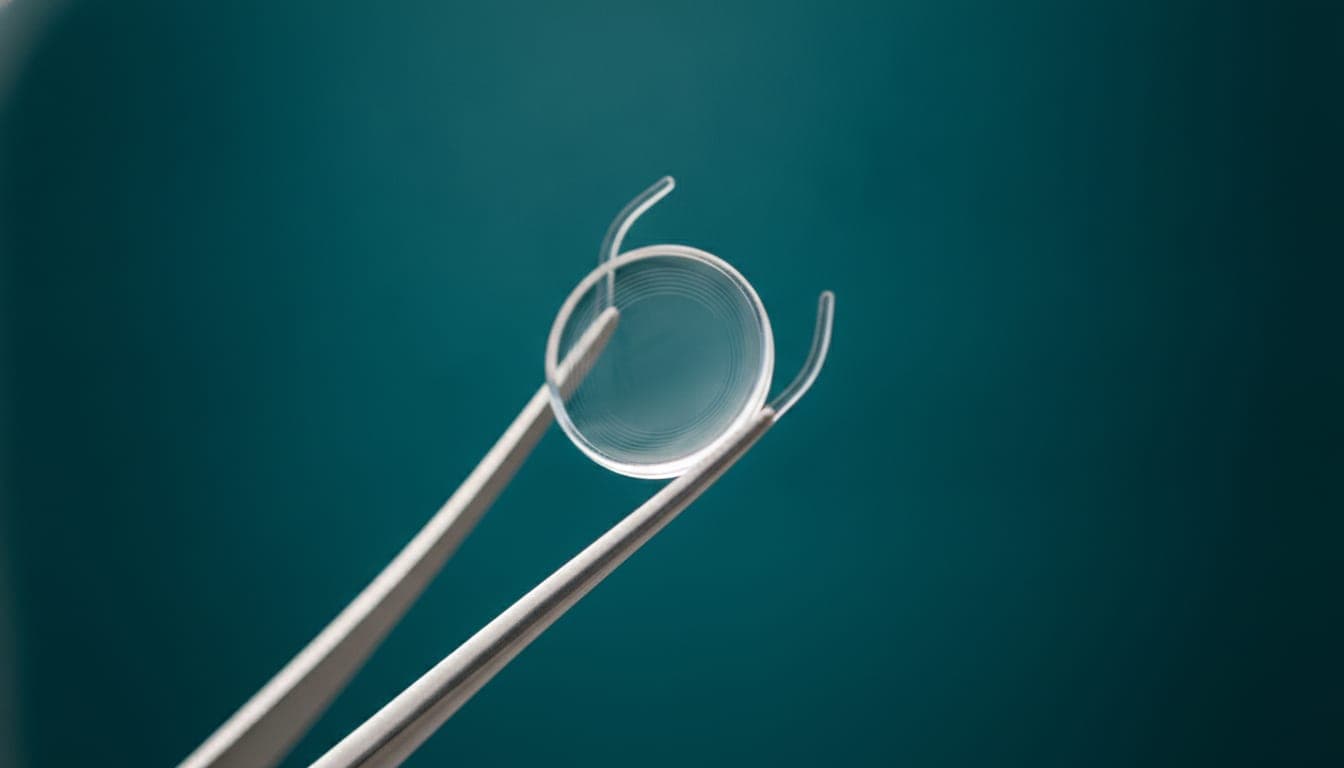
Refractive Lens Exchange — also called lens replacement surgery, clear lens extraction (CLE), or presbyopic lens exchange — is a surgical procedure in which the eye’s natural lens is removed and replaced with an artificial intraocular lens (IOL).
It’s the same technique used in cataract surgery, but performed on patients who still have a clear natural lens. The goal is to correct refractive errors (long-sightedness, short-sightedness, astigmatism) and presbyopia — the progressive loss of near-vision that typically begins in your mid-40s.
RLE is particularly well-suited to patients who:
- ✓Are aged 45 and over with presbyopia (reading glasses dependency)
- ✓Have a high prescription that makes laser surgery less suitable
- ✓Want to reduce or eliminate dependence on glasses entirely
- ✓Already have early-stage cataracts or a family history of them
- ✓Are looking for a permanent, long-term vision solution
Lens replacement surgery costs across Europe in 2026
Prices vary considerably depending on the country, city, clinic and type of IOL used. The table below reflects typical market rates for premium multifocal or EDOF lens replacement as of early 2026.
| Country | Per eye | Both eyes |
|---|---|---|
| 🇬🇧 United Kingdom | from £4,200 | £7,500 – £14,000 |
| 🇮🇪 Ireland | from €4,500 | €8,000 – €15,000 |
| 🇩🇪 Germany | from €3,800 | €7,000 – €13,000 |
| 🇦🇹 Austria | from €3,200 | €6,000 – €12,000 |
| 🇨🇭 Switzerland | from CHF 4,500 | CHF 8,000 – 15,000 |
| 🇸🇪 Sweden | from 38,000 SEK | 65,000 – 110,000 SEK |
| 🇳🇴 Norway | from 45,000 NOK | 80,000 – 130,000 NOK |
| 🇩🇰 Denmark | from 28,000 DKK | 50,000 – 90,000 DKK |
| 🇺🇸 United States | from $5,000 | $9,000 – $18,000 |
| 🇨🇿 Prague (Clear Sight Abroad) | from €1,490 | from €2,980 |
* Prices are estimates based on public clinic data as of early 2026. Premium IOLs (trifocal, EDOF) may increase costs. Always request a personalised quote.
Why does lens replacement cost so much in Western Europe?
The price difference isn’t about quality — it’s driven by structural cost differences between healthcare markets.
High operating costs
Private ophthalmology clinics in London, Dublin, Munich or Stockholm operate in expensive commercial real estate markets and pay significantly higher salaries, utilities and running costs than comparable clinics in Prague.
Elective procedures are not covered by insurance
Whether you’re in the UK (NHS), Germany (GKV statutory insurance) or Sweden (Försäkringskassan), refractive lens replacement is considered elective and is almost universally excluded from public or standard private health coverage. You pay out of pocket — and clinics price accordingly.
Premium branding and low patient volume
Many Western European clinics operate with relatively low patient volumes and charge a premium per procedure to cover overheads and margin. High-volume specialist centres in Prague can offer competitive pricing while maintaining the same quality standards.
Why is Prague so much cheaper — without compromising quality?
The Czech Republic has significantly lower living costs and medical sector overheads than most Western European countries. A surgeon with the same training and qualifications simply earns less than a comparable colleague in London or Oslo — not because they are less skilled, but because the cost of living allows it.
Czech clinics are regulated by the State Institute for Drug Control (SÚKL) and operate under EU medical device and healthcare standards — the same regulatory framework as Germany, France or the Netherlands.
Key reasons Prague can offer competitive pricing:
- ✓Lower cost of living and staff salaries vs. Western Europe
- ✓High patient volume allows efficient pricing without reducing margins per procedure
- ✓Czech Republic is within the EU — same medical device regulations as Germany or France
- ✓Surgeons trained in Western European institutions (FEBO-certified, ESCRS members)
- ✓Same equipment used: Zeiss, Alcon, HAAG-STREIT (identical to UK/German clinics)
- ✓No middlemen — patients book directly or through a coordinator at no extra cost
What is included in the lens replacement price in Prague?
At Clear Sight Abroad, the price quoted is all-inclusive. There are no hidden charges added at consultation or on the day of surgery.
- ✓Pre-operative biometry and ophthalmic examination
- ✓Consultation with your operating surgeon
- ✓Lens replacement procedure under local anaesthesia
- ✓Choice of IOL: monofocal, EDOF (extended depth of focus) or trifocal
- ✓Post-operative care appointments
- ✓Medications and eye drops for the recovery period
- ✓English-speaking patient coordinator throughout
- ✓Online follow-up consultation after your return home
The only costs not included are your flights and accommodation — typically £150–£350 return from the UK or Germany, with comfortable hotels available from €60–€100 per night near the clinic.
How long will I need to stay in Prague?
For most RLE patients, a 4–5 day trip is sufficient. The typical schedule looks like this:
- ✓Day 1: Arrival and pre-operative examination
- ✓Day 2: Surgery on the first eye (outpatient, 20–30 minutes)
- ✓Day 3: Rest and initial recovery
- ✓Day 4: Surgery on the second eye (if both eyes are being treated)
- ✓Day 5: Post-operative check and clearance to fly
You should not drive immediately after surgery, and most surgeons recommend avoiding strenuous activity for 1–2 weeks. Most patients return to desk work within a few days of each procedure.
What type of lens is right for me?
The choice of IOL is one of the most important decisions in lens replacement surgery. Your surgeon will recommend a lens based on your lifestyle, prescription and visual goals.
Monofocal IOL
The most established option. Corrects distance vision clearly. Most patients will still need reading glasses. Lower cost, excellent long-term results.
EDOF (Extended Depth of Focus)
Provides a continuous range of clear vision from distance to intermediate (computer distance). Excellent for active patients. Minimal compromise on night vision.
Trifocal IOL
The most advanced option, providing clear vision at distance, intermediate and near ranges. The goal is complete spectacle independence. Some patients experience mild halos or glare at night in the early months.
How to choose a clinic for lens replacement abroad
Not all clinics offering surgery abroad are equal. When evaluating options, look for:
- ✓Surgeons certified by FEBO (Fellow of the European Board of Ophthalmology)
- ✓Membership of ESCRS (European Society of Cataract & Refractive Surgeons)
- ✓Modern diagnostic and surgical equipment (Zeiss, Alcon)
- ✓Transparent, all-inclusive pricing
- ✓A dedicated English-speaking coordinator
- ✓Clear aftercare and complication protocol
- ✓Independent patient reviews (not curated testimonials)
What patients say
“I was quoted £11,000 for trifocal lenses in London. In Prague I paid just over €3,000 for both eyes. The clinic was spotless, the surgeon was fantastic, and I can now read a menu without glasses for the first time in 15 years.”
“My optician in Dublin told me I wasn’t suitable for laser — my prescription was too high. RLE in Prague solved everything. The coordinator helped me organise every step. I’d recommend it without hesitation.”
“Ich hatte Bedenken wegen einer Operation im Ausland. Aber das Klinikteam war so professionell und das Ergebnis überwältigend. Meine Frau lässt sich nächstes Jahr auch operieren.”
Frequently asked questions
Is it safe to have lens replacement surgery abroad?+
Yes — when performed by a qualified, experienced surgeon using modern equipment in an accredited clinic. Czech medical facilities are regulated to EU standards and must meet the same criteria as clinics in Germany, France or the UK. The key is choosing the right clinic and surgeon, not the country.
How do I know if I'm a candidate for RLE?+
The best way to find out is to send us your most recent glasses or contact lens prescription, along with your age and any relevant eye history. We'll review it and let you know whether RLE is likely to be suitable before you commit to anything.
Can I fly after lens replacement surgery?+
Most patients are cleared to fly 24–48 hours after each eye. We typically recommend a 4–5 day stay in Prague to allow for surgery on both eyes and a post-operative check before your return journey.
Does my insurance cover lens replacement surgery abroad?+
In most cases, no. RLE is classified as an elective procedure and is excluded from NHS, GKV and most private health policies. Some comprehensive international health insurance plans may offer partial reimbursement — check your policy or speak to your insurer before travelling.
What happens if I develop a complication after returning home?+
In the unlikely event of a post-operative complication, we provide an emergency contact and coordinate with your local ophthalmologist. We also offer a follow-up online consultation included in your package. Serious complications from RLE are rare — the procedure has a long safety record when performed by trained surgeons.
What if I need glasses after surgery?+
The goal of trifocal or EDOF lens replacement is spectacle independence for most activities. However, a small number of patients may benefit from very low-strength glasses for specific tasks (e.g. prolonged fine print reading). Your surgeon will discuss realistic expectations with you at consultation.
Ready to find out if you qualify?
Send us your details for a free online consultation. Our English-speaking team will respond within 24 hours.