Why the Czech Republic Is the Best Country for Lens Replacement Surgery (2026)

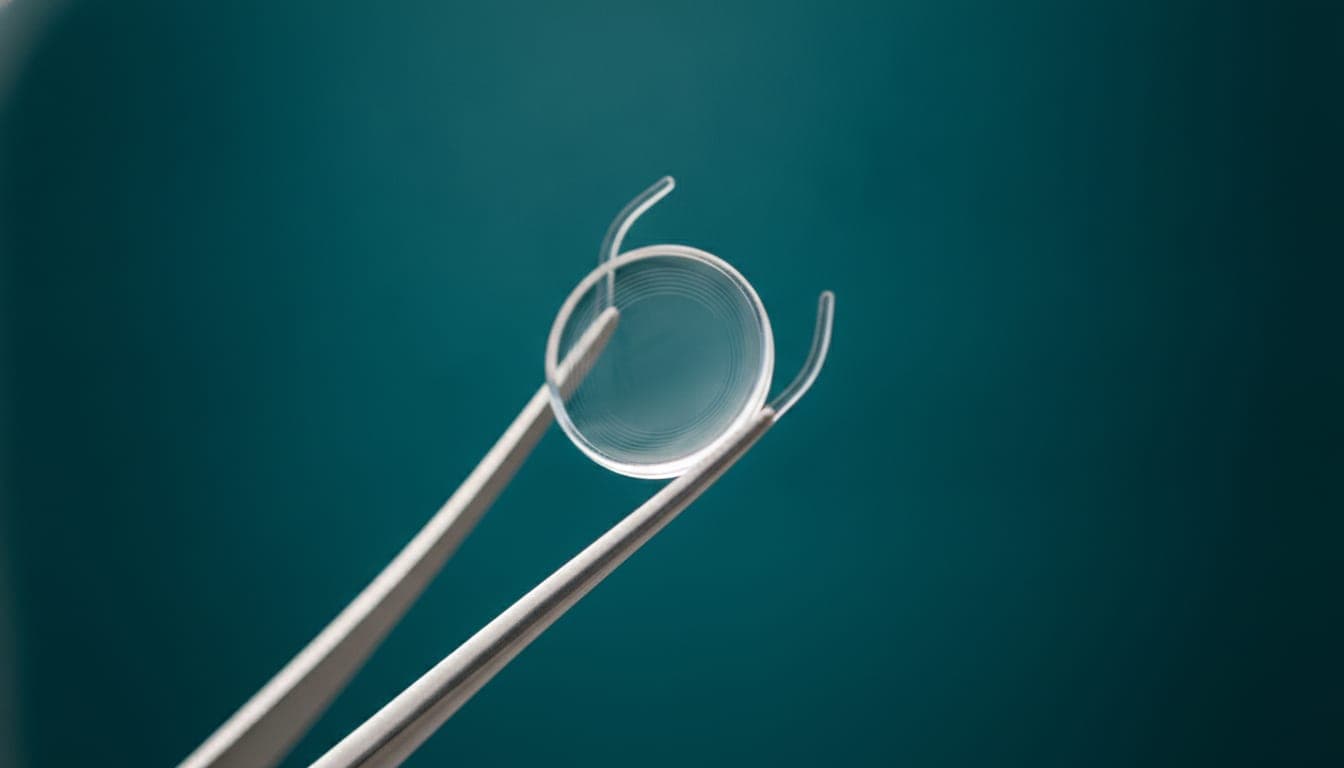
Lens replacement surgery — also called refractive lens exchange (RLE) — is one of the most transformative elective procedures in modern ophthalmology. By replacing the eye’s natural lens with a premium artificial intraocular lens (IOL), it permanently corrects presbyopia, high hyperopia and high myopia, while simultaneously eliminating any future risk of cataract. With a trifocal or EDOF lens, most patients achieve sharp vision at near, intermediate and distance distances — without glasses or contact lenses.
For patients in the UK, Ireland, Germany, Scandinavia and North America, the challenge is not finding a surgeon who can perform this procedure. It is finding one who can do it at a price that does not require financing a second mortgage. The costs in Western Europe and North America regularly reach £10,000–£14,000 for both eyes. This has driven tens of thousands of patients to explore lens replacement abroad — and for the majority of European patients, one destination rises consistently above the rest: the Czech Republic.
What is lens replacement surgery (RLE)?
Lens replacement surgery removes your eye’s natural crystalline lens through a small, self-sealing incision and replaces it with a precisely calculated artificial intraocular lens (IOL). The procedure takes 15–25 minutes per eye under local anaesthetic (eye drops). There are no stitches and no patches. You can typically read text messages on the way home.
It is most commonly recommended for patients aged 45–65 who:
- ✓Suffer from presbyopia (the gradual loss of near vision that affects almost everyone in their mid-40s)
- ✓Have high hyperopia (+4D or above) not suitable for laser correction
- ✓Have high myopia where laser surgery is contraindicated
- ✓Want permanent spectacle independence before cataracts develop
- ✓Are unsuitable for LASIK or SMILE due to thin corneas or corneal irregularities
Unlike LASIK or SMILE, which reshape the cornea, lens replacement is a permanent, irreversible procedure. The decision should be made with full information and a surgeon who takes time to understand your visual goals.
Why the Czech Republic consistently outperforms other destinations
1. EU-regulated medicine — the same framework as Germany or France
The Czech Republic is a full EU member state. Its healthcare is regulated by SUKL (the State Institute for Drug Control) under the same EU Medical Device Regulation (MDR) that governs clinics in Germany, the Netherlands and France. Every IOL implanted in a Czech clinic must carry EU CE marking. Every surgeon must hold qualifications recognised across the EU. Every patient retains full EU legal recourse.
This matters. Non-EU destinations — Turkey, Thailand, India — may offer attractive prices, but the regulatory framework is fundamentally different. EU membership is not a minor administrative detail; it is the foundation of clinical accountability.
2. FEBO-certified surgeons with 15–25 years of refractive lens experience
The Fellow of the European Board of Ophthalmology (FEBO) is the gold standard credential in European eye surgery. The examination is identical regardless of whether the candidate trained in Prague, Munich or Paris. A FEBO number is independently verifiable through the European Board of Ophthalmology’s register.
Leading Prague clinics — including Gemini Eye Clinic, where Clear Sight Abroad patients are treated — employ surgeons who have performed 10,000+ lens procedures. This is not a new market for them. Many Prague surgeons were performing lens replacement surgery before it became fashionable in Western Europe.
3. Premium IOLs from all major global manufacturers — no compromises
The IOL you receive is arguably more important than where you have surgery. Prague’s leading clinics stock the full range of premium IOLs from every major manufacturer:
- ✓Alcon PanOptix — the world's most implanted trifocal IOL, with excellent near, intermediate and distance performance
- ✓Johnson & Johnson Tecnis Synergy — extended depth of focus combined with near performance
- ✓ZEISS AT LISA tri — German engineering, continuous range, low halos
- ✓Hoya Vivinex Impress — excellent light transmission, minimal visual disturbances
- ✓Alcon AcrySof IQ — the gold-standard monofocal with aspheric optics
- ✓Toric variants of all above, for patients with significant astigmatism
The lens chosen for you is based on your individual biometry — not on clinic stock limitations or financial incentives. Your surgeon will recommend the lens that best matches your visual requirements and lifestyle.
4. Advanced diagnostic technology: swept-source OCT biometry
The accuracy of IOL power calculation is the single most important technical factor in achieving the target refraction after lens replacement. Gemini Eye Clinic uses swept-source OCT biometry (the same technology used at leading German and UK centres), which provides far more precise axial length measurements than older optical biometry — particularly in patients with long eyes, dense cataracts or unusual ocular anatomy.
Poor biometry is the leading cause of suboptimal outcomes after lens replacement — not surgical skill. Choosing a clinic with state-of-the-art diagnostic equipment is as important as choosing a skilled surgeon.
5. No waiting list
In the UK, NHS cataract surgery waiting lists now stretch to 18 months in many trusts. For private lens replacement, the bottleneck is typically the pre-operative assessment — clinics at leading London centres can have 4–6 week waits just for the initial consultation. In Germany, Kassenärztliche Vereinigung allocation means even privately insured patients sometimes wait months.
In Prague, the standard pathway from first contact to surgery is 2–4 weeks. Patients requiring urgent treatment can often be seen within days. The absence of a waiting list is not a minor convenience — for a progressive condition like high myopia or advancing presbyopia, it has real clinical significance.
6. The 5-day treatment experience
Clear Sight Abroad has designed a complete 5-day treatment pathway specifically for international patients:
- ✓Day 1: Arrival in Prague. Meet your dedicated English-speaking consultant.
- ✓Day 2: Comprehensive pre-operative examination at Gemini Eye Clinic. Biometry, topography, endothelial cell count, pupillometry, IOL simulation. Surgical plan confirmed.
- ✓Day 3: Surgery on the first eye (some patients opt for bilateral same-day surgery after surgeon assessment).
- ✓Day 4: Post-operative check. Second eye surgery (if bilateral staged approach).
- ✓Day 5: Final clinical review. Safe departure.
Your English-speaking consultant accompanies you to every clinical appointment. All instructions are provided in English. A 24-hour emergency contact is available throughout your stay.
7. The cost advantage — without compromise
The price difference between Prague and Western Europe is not a result of lower quality. It reflects the lower cost of living in the Czech Republic, which reduces clinic overheads, staffing costs and property expenses — while using identical IOL products (which are traded at similar EU wholesale prices across all member states) and the same diagnostic and surgical equipment.
A patient paying €2,980 for bilateral trifocal lens replacement in Prague receives the same Alcon PanOptix lenses, the same swept-source OCT biometry, and surgery from a surgeon with equivalent or superior experience to a surgeon charging £12,000 in London. The difference is the economic context, not the clinical content.
Price comparison: lens replacement surgery in 2026
| Country | Monofocal (per eye) | Trifocal / EDOF (per eye) | Both eyes (trifocal) |
|---|---|---|---|
| 🇬🇧 United Kingdom | from £3,200 | from £4,500 | £7,000 – £14,000 |
| 🇮🇪 Ireland | from €3,500 | from €4,800 | €7,500 – €15,000 |
| 🇩🇪 Germany | from €2,800 | from €3,800 | €6,000 – €13,000 |
| 🇦🇹 Austria | from €2,500 | from €3,500 | €5,500 – €12,000 |
| 🇨🇭 Switzerland | from CHF 3,500 | from CHF 4,800 | CHF 8,000 – 15,000 |
| 🇸🇪 Sweden | from 32,000 SEK | from 40,000 SEK | 65,000 – 110,000 SEK |
| 🇳🇴 Norway | from 38,000 NOK | from 50,000 NOK | 80,000 – 130,000 NOK |
| 🇺🇸 United States | from $3,500 | from $5,000 | $8,000 – $18,000 |
| 🇨🇿 Prague (Clear Sight Abroad) | from €990 | from €1,490 | from €2,980 |
* Prices are estimates based on public clinic data as of early 2026. Premium toric IOLs for astigmatism may cost slightly more. Always request a personalised quote.
What about Spain, Hungary or Turkey?
Spain is a solid EU alternative, with good ophthalmology and prices of €2,000–€3,500 per eye for premium IOLs. The disadvantage for UK and Northern European patients is travel time (2.5–3 hours vs. 2 hours to Prague) and a less developed international patient infrastructure outside Madrid and Barcelona.
Hungary offers EU-regulated care with prices slightly below Prague (€1,200–€2,400 per eye). The sector is smaller, with fewer clinics having the accumulated volume of complex premium IOL cases that Prague’s leading centres have.
Turkey is the cheapest option — often €900–€1,600 per eye — but operates outside EU regulatory oversight. Quality at established Istanbul centres is generally acceptable, but clinic-to-clinic variability is substantially higher, and EU patient protections do not apply.
Am I a candidate for lens replacement surgery?
Lens replacement is most appropriate for patients who:
- ✓Are aged 45 or over (though some younger patients with very high prescriptions may qualify earlier)
- ✓Have a stable prescription for at least 12 months
- ✓Are not suitable for laser eye surgery (thin corneas, high prescription, dry eyes)
- ✓Have presbyopia and want freedom from reading glasses
- ✓Understand that the procedure is irreversible and commits permanently to the chosen IOL
- ✓Have no contraindications such as advanced glaucoma, significant macular disease, or certain corneal conditions
The only way to confirm suitability is through a comprehensive pre-operative examination. At Clear Sight Abroad, we begin with a free online consultation — no commitment required — to discuss your prescription, history and expectations before recommending any specific pathway.
Frequently asked questions
Is lens replacement surgery the same as cataract surgery?+
The surgical technique is identical: the natural lens is phacoemulsified (dissolved with ultrasound) and removed, and an artificial IOL is implanted. The difference is indication and timing. Cataract surgery treats a cloudy lens that is impairing vision. Lens replacement (RLE) replaces a clear but refractive lens in a younger patient who wants permanent spectacle independence before cataracts develop. Having RLE means you will never develop a cataract, since the lens has already been replaced.
Which IOL is best for lens replacement — trifocal, EDOF or monofocal?+
There is no universally 'best' IOL. Trifocal lenses (PanOptix, AT LISA tri) give excellent near, intermediate and distance vision with good halos at night. EDOF lenses give smooth, continuous distance-to-intermediate vision with fewer halos, but some compromise at near. Monofocal IOLs give the sharpest single-distance vision (usually distance) with glasses needed for close work — best for patients who drive at night frequently and want minimal optical side effects. Your surgeon will recommend based on your biometry, pupil size, lifestyle and visual expectations.
Is lens replacement safe? What are the risks?+
Lens replacement at an experienced, EU-regulated centre has an excellent safety profile. Serious complications such as retinal detachment occur in fewer than 1 in 1,000 procedures at quality centres. The most common issue is posterior capsule opacification (PCO), which occurs in 20–30% of patients within 1–5 years and is treated with a simple 10-minute YAG laser capsulotomy. Night-time halos and glare are common with trifocal IOLs and typically improve over 3–6 months of neuroadaptation. Your surgeon should give you a full, honest risk discussion at the pre-operative assessment.
How long does recovery take after lens replacement surgery?+
Most patients see clearly within 24–48 hours, with vision continuing to improve over 2–4 weeks as the eye settles. You should avoid swimming, contact sports and eye rubbing for 4 weeks. Driving is usually possible within 1–2 days for patients with monofocal IOLs, and within 3–5 days for multifocal IOLs (allowing time for neuroadaptation). Reading and screen work can typically resume within 24 hours.
What if I need follow-up care after returning home?+
Clear Sight Abroad coordinates a structured follow-up protocol. Your 1-week check is performed in Prague (or remotely with your local optometrist using a standardised form). Your 4–6 week check can be with a local optometrist, with results shared digitally with the Prague surgical team. If you develop any concern after returning home, our team is reachable by email and phone during business hours, and we maintain a relationship with partner optometrists in major UK and European cities.
Can I combine lens replacement surgery with exploring Prague?+
Yes — many of our patients do. Prague is one of Europe's most beautiful historic cities, with excellent hotels, restaurants and cultural attractions all walkable from the city centre. Post-operatively, you can enjoy normal tourist activities within 24–48 hours. We suggest arriving a day before your examination to acclimatise, and building in 1–2 leisure days around your treatment. Our team can recommend accommodation near the clinic.
How do I get started with Clear Sight Abroad?+
Begin with our free online consultation — no commitment required. Share your current prescription, age and any relevant medical history. Our team will review your details and advise whether lens replacement is likely suitable, which IOL types may be appropriate, and what the full cost would be. If you decide to proceed, we arrange the pre-operative examination date and coordinate all logistics including airport transfer, clinic appointments and accommodation recommendations.
Ready to find out if you qualify?
Send us your details for a free online consultation. Our English-speaking team will respond within 24 hours.