Where to Go for Eye Surgery Abroad: Turkey vs. the Czech Republic
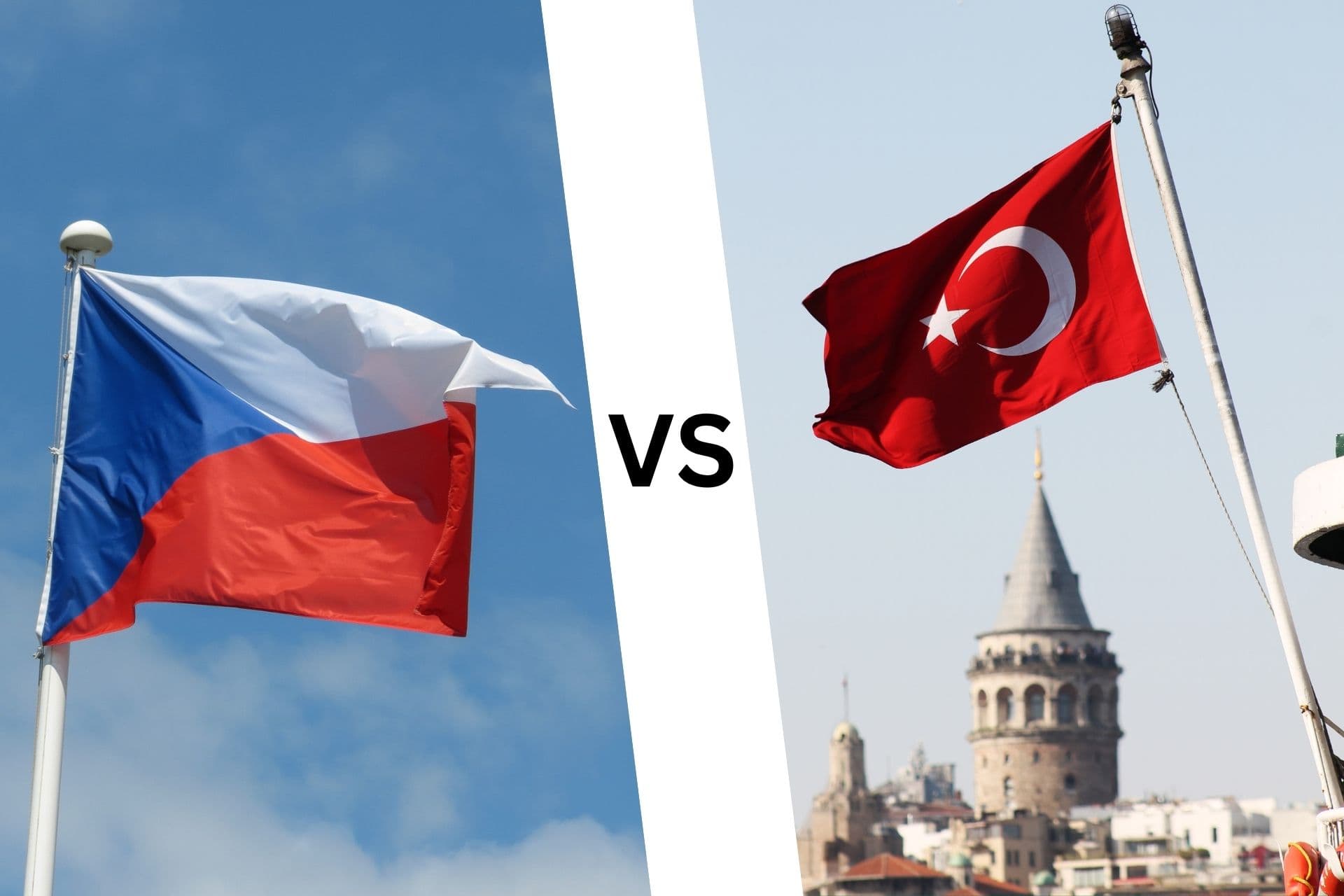
Eye surgery abroad has grown significantly over the past decade. For patients from the UK, Ireland, Scandinavia and Western Europe, two destinations consistently dominate the conversation: Turkey and the Czech Republic. Both offer substantially lower prices than home-country private clinics — but the similarities largely end there.
This guide gives you an honest, side-by-side comparison — covering regulatory frameworks, surgeon qualifications, technology, cost, travel logistics and aftercare. The aim is not to steer you toward a predetermined answer, but to give you the information you need to make the right choice for your specific situation.
Why patients choose Turkey for eye surgery
Turkey — particularly Istanbul — has invested heavily in healthcare infrastructure and medical tourism marketing over the past two decades. Leading Istanbul clinics offer LASIK from around €400–€600 per eye and lens replacement from €900–€1,600 per eye — figures that are difficult to match elsewhere in Europe. The city is well-connected to the rest of Europe with multiple daily flights, and many clinics provide coordinator services designed specifically for international patients.
- ✓Lowest prices in Europe for most procedures
- ✓Istanbul is a major international hub with good flight connections from the UK and Europe
- ✓Strong medical tourism infrastructure: interpreters, transfers, accommodation packages
- ✓Some highly experienced surgeons, particularly in established private centres
- ✓Wide procedure range including complex cases
Why patients choose the Czech Republic
The Czech Republic occupies a different position in the medical tourism landscape. Prague competes on the combination of EU-standard regulation, Western European clinical quality, and prices still 40–60% below what patients would pay in the UK, Germany or Ireland.
Czech clinics operate under SÚKL — the State Institute for Drug Control — the same EU medical device and pharmaceutical regulatory framework that governs German or French facilities. Surgeons at leading Prague clinics hold FEBO certification (Fellow of the European Board of Ophthalmology), the same pan-European standard as top UK, German and Spanish eye surgeons.
- ✓EU-regulated: Czech facilities operate under SÚKL, the same framework as Germany and France
- ✓FEBO-certified surgeons: the European Board standard for specialist ophthalmology training
- ✓Identical equipment: Zeiss VISUMAX 800, Alcon WaveLight and modern OCT diagnostics at leading clinics
- ✓Two-hour flight from London — easier to return for follow-up visits if needed
- ✓Strong English-language infrastructure and significant international patient experience
- ✓Prague is a genuinely pleasant European city — recovery time here is no hardship
Side-by-side comparison
| Factor | Turkey | Czech Republic |
|---|---|---|
| Medical regulation | National (outside EU) | EU-regulated (SÚKL) — same as Germany, France |
| Surgeon certification | Turkish Board / variable | FEBO — European Board of Ophthalmology |
| Main laser technology | Varies — modern at top clinics | Zeiss VISUMAX 800, Alcon WaveLight |
| LASIK (per eye) | €400–€700 | €750–€1,800 |
| Lens replacement (per eye) | €900–€1,600 | €1,400–€2,600 |
| Cataract surgery (per eye) | €600–€1,400 | €1,100–€2,500 |
| Flight time from London | ~3.5–4.5 hours | ~2 hours |
| English-language support | Available at major clinics | Standard at international clinics |
| Follow-up access | Requires return trip or remote | Shorter trip feasible; remote available |
| EU patient recourse | Outside EU legal framework | Full EU medical and legal framework |
| Savings vs. UK private | ~60–70% | ~40–55% |
* Prices per eye, based on publicly available clinic data as of early 2026.
Regulatory framework: what it means in practice
Equipment approval: In the EU, medical devices must carry CE marking, demonstrating conformity with EU safety standards. This applies to laser platforms, diagnostic equipment and intraocular lenses. Turkish clinics are not subject to this requirement — though leading centres voluntarily use CE-marked equipment.
Surgeon licensing: EU member states operate under common medical licensing frameworks. A Czech ophthalmologist must meet the same licensing requirements as a German or French surgeon. Turkish surgeons are licensed by their national board — a rigorous system, but a separate one.
Patient recourse: If something goes wrong in an EU country, you have access to EU consumer and healthcare protection frameworks. You can engage the Czech Medical Chamber, seek a second opinion from any EU-licensed surgeon, and pursue complaints through EU-standard processes. Outside the EU, recourse requires navigating local Turkish legal processes.
This does not mean Turkish clinics are unsafe — many are not. But the regulatory floor is lower and the variability between clinics is higher. Due diligence is essential, and the consequences of choosing the wrong clinic are greater.
Real cost comparison: after travel
| Cost element | Turkey (Istanbul) | Czech Republic (Prague) |
|---|---|---|
| Lens replacement — both eyes | €1,800–€3,200 | €2,800–€5,200 |
| Return flights from London | €120–€250 | €80–€180 |
| Hotel (2 nights) | €100–€200 | €140–€240 |
| Total estimated cost | €2,020–€3,650 | €3,020–€5,620 |
| Saving vs. UK private (≈£10,000–£13,000) | ~£6,000–£9,500 | ~£4,500–£8,000 |
Even accounting for travel, Turkey is cheaper in absolute terms. The question is whether the additional saving of €1,000–€1,500 justifies the longer travel time, the non-EU regulatory environment, and the greater difficulty of follow-up access.
Travel and follow-up
Turkey (Istanbul): Direct flights from London, Dublin and most European cities run multiple times daily. Flight time is typically 3.5–4.5 hours each way. A return trip for a follow-up check requires a half-day or full day of travel in each direction. Many Turkish clinics offer remote follow-up via telehealth, but this is a meaningful trade-off for a procedure involving permanent implants.
Czech Republic (Prague): Prague is approximately 2 hours from London by air, with frequent direct services from over 30 UK and European airports. For German, Austrian or Swiss patients, Prague is reachable by train. A follow-up visit is a genuinely short round trip — many UK patients fly out on a morning flight and return the same evening.
Which destination suits which patient?
Turkey may be the right choice if:
- ✓Price is your primary consideration and you are having a straightforward LASIK procedure
- ✓You are comfortable navigating non-EU healthcare and have done thorough research on a specific Istanbul clinic
- ✓You are content with remote follow-up rather than in-person visits
Czech Republic is likely the stronger choice if:
- ✓You are having lens replacement or cataract surgery — higher-stakes procedures where EU regulation matters more
- ✓You want the certainty of FEBO-certified surgeons under the European Board standard
- ✓You want the ability to return for follow-up without a major travel commitment
- ✓You want a dedicated English-speaking coordinator managing your entire journey, from initial consultation to safe return home
- ✓You want EU-standard patient recourse in the unlikely event of complications
Frequently asked questions
Is eye surgery in Turkey safe?+
Eye surgery in Turkey can be safe — there are genuinely skilled surgeons and modern facilities in Istanbul. However, quality varies considerably between clinics, and Turkey operates outside the EU regulatory framework. If you consider Turkey, thorough due diligence on the specific clinic and surgeon is essential. Verify your surgeon's credentials, confirm the clinic uses CE-marked equipment, and ask specifically about their complication management protocol for international patients.
How do Czech surgeons compare to Turkish surgeons in terms of qualifications?+
Leading Prague clinics employ surgeons with FEBO certification — Fellow of the European Board of Ophthalmology — the same pan-European standard as top eye surgeons in Germany, France, Spain and the UK. This certification is verifiable independently through the European Board of Ophthalmology register. Turkish surgeons are licensed by the Turkish Medical Association, which has its own rigorous standards but is a separate, non-European framework.
Is it worth saving the extra €1,000–€1,500 by choosing Turkey over the Czech Republic?+
For a straightforward LASIK procedure at a well-researched Istanbul clinic, the extra saving may be worthwhile. For lens replacement or cataract surgery — more complex procedures involving permanent implants — most patients conclude that EU regulatory protection and closer follow-up access justify the higher cost of the Czech Republic. Only you can weigh those factors against your budget.
What happens if I have a complication after surgery in Turkey?+
If a complication arises while still in Turkey, the clinic would treat you. If it develops after returning home, you would need to return to Turkey at your own cost, or seek treatment from a local ophthalmologist who has no access to your original surgical records. In an EU country like the Czech Republic, shared clinical records and a closer geographic connection make managing post-operative issues substantially easier.
Can I use my EHIC or travel insurance for eye surgery abroad?+
The European Health Insurance Card (EHIC) covers medically necessary treatment at public hospitals. It does not cover elective procedures — LASIK, lens replacement and cataract surgery are elective and not covered. Standard travel insurance typically excludes pre-planned medical procedures. Specialist medical travel insurance is available and recommended for any planned surgical procedure abroad.
How many trips do I need for eye surgery in Prague?+
Most procedures require a minimum of two visits: a pre-operative assessment and the procedure itself, usually the following day. Many Prague clinics serving international patients allow both to be completed in a single trip of 2–3 nights. A follow-up check at 4–6 weeks is strongly recommended — this can often be done remotely or delegated to a local optometrist.
Ready to find out if you qualify?
Send us your details for a free online consultation. Our English-speaking team will respond within 24 hours.