Did You Know? Czech Eye Surgeons Are Among the Best in the World

When people think of world-class eye surgery, countries like Germany, the United States or South Korea often come to mind. But there is another country that consistently punches far above its weight — the Czech Republic. With a population of just over 10 million, the country produces some of the most skilled and sought-after ophthalmologists in Europe, performing well over 100,000 eye surgeries every year.
This is not a recent development. Czech ophthalmology has a tradition stretching back more than a century, rooted in rigorous medical education, a culture of scientific excellence, and an early adoption of the most advanced surgical technologies available anywhere in the world.
A Legacy of Medical Excellence
The Czech Republic has been at the forefront of European medicine since the founding of Charles University in 1348 — the oldest university in Central Europe. The Faculty of Medicine in Prague has produced generations of physicians and researchers who have shaped modern ophthalmology.
Czech surgeons were among the earliest adopters of phacoemulsification for cataract surgery in the 1990s, and the country's eye clinics were some of the first in Europe to offer femtosecond laser-assisted procedures. Today, Prague-based clinics routinely use the same platforms as leading centres in London, Munich and Boston — including the Zeiss VisuMax 800 for ReLEx SMILE, the Alcon LenSx for femto-cataract surgery, and the latest generation of trifocal and EDOF intraocular lenses.
World-Class Training, European Certification
Becoming an eye surgeon in the Czech Republic is no easy path. After completing a six-year medical degree, doctors enter a rigorous five-year residency in ophthalmology at a university hospital. During this time, they gain hands-on experience in every sub-specialty — from corneal and refractive surgery to vitreoretinal procedures and paediatric ophthalmology.
Many Czech ophthalmologists go further, passing the European Board of Ophthalmology (EBO) examination to earn the FEBO designation. This is a voluntary, pan-European certification that tests both theoretical knowledge and clinical competence — and it is widely recognised as a mark of excellence. The pass rate across Europe is typically below 70%, making it a meaningful filter for quality.
- ✓6-year medical degree at a Czech university (Charles University, Masaryk University, Palacký University)
- ✓5-year specialist residency in ophthalmology at a university hospital
- ✓Optional FEBO certification — the European gold standard
- ✓Ongoing continuing medical education (CME) requirements
- ✓Regular participation in international congresses (ESCRS, EURETINA, AAO)
Why Czech Surgeons Perform So Many Procedures
Volume matters in surgery. The more procedures a surgeon performs, the better their outcomes tend to be — this is well-documented in medical literature. Czech eye surgeons benefit from an unusually high surgical volume for several reasons:
1. A centralised, efficient healthcare system
The Czech Republic has a relatively small number of highly specialised eye centres, rather than thousands of small practices. This means that complex cases are concentrated in the hands of experienced teams, rather than spread thinly across many providers.
2. A growing medical tourism sector
Prague has become one of Europe's leading destinations for eye surgery abroad, attracting patients from the UK, Ireland, Germany, Austria, Scandinavia and beyond. This international demand further increases the surgical volume — and with it, the experience — of Czech surgeons.
3. An ageing population driving cataract demand
Like much of Europe, the Czech Republic has an ageing population, which creates a steady demand for cataract surgery. Czech surgeons typically perform hundreds of cataract procedures per year — far more than the average in many Western European countries where waiting lists are longer and private options more fragmented.
Technology That Matches the World's Best
It would mean little to have excellent surgeons if they were working with outdated equipment. Fortunately, Czech eye clinics — particularly those in Prague — invest heavily in the latest technology. Here is what you will find at a leading Prague clinic today:
- ✓Zeiss VisuMax 800 — the latest generation femtosecond laser for ReLEx SMILE Pro, offering lenticule extraction in under 10 seconds
- ✓Alcon LenSx — femtosecond laser platform for bladeless cataract surgery with micron-level precision
- ✓Zeiss IOLMaster 700 — swept-source OCT biometry for the most accurate lens power calculation
- ✓Alcon PanOptix and Zeiss AT LISA trifocal IOLs — premium lenses for spectacle-free vision at all distances
- ✓Johnson & Johnson TECNIS Synergy — a next-generation extended depth-of-focus (EDOF) lens
- ✓Topcon Maestro2 OCT — advanced retinal imaging for comprehensive pre-operative assessment
This is the same equipment used by the most prestigious eye centres in Western Europe and the United States. The difference is cost — Prague clinics can offer the same technology at 40–60% less, primarily because of lower overheads, not lower quality.
EU Regulation and Patient Safety
The Czech Republic is a full member of the European Union, which means its healthcare system is subject to the same regulatory framework as Germany, France or the Netherlands. This includes:
- ✓EU Medical Devices Regulation (MDR) — all surgical equipment and implants must meet the same CE-marking standards as anywhere in the EU
- ✓EU Directive on Cross-Border Healthcare — patients have the right to seek treatment in any EU member state
- ✓Czech Ministry of Health oversight — clinics are regularly inspected and must meet national accreditation standards
- ✓Mandatory malpractice insurance for all practising surgeons
- ✓Full post-operative care protocols, including emergency pathways
For patients from the UK or Ireland, this means you are protected by EU patient rights legislation. For patients from Germany or Austria, treatment in the Czech Republic is subject to the exact same medical device standards as at home — because it is the same single market.
What International Patients Say
The proof is ultimately in the outcomes. Czech eye clinics consistently achieve patient satisfaction rates above 95%, with complication rates comparable to or better than leading centres in the UK and Germany. Here is what patients commonly highlight:
- ✓Surgeons who speak fluent English (and often German)
- ✓Thorough, unhurried consultations — typically 60–90 minutes for the initial assessment
- ✓Transparent pricing with no hidden costs
- ✓Modern, clean facilities that feel more like a private London clinic than a hospital
- ✓Genuine personal attention — Czech clinics see fewer patients per surgeon, meaning more time per case
How Czech Surgeons Compare Internationally
To put things in perspective, here is how Czech ophthalmologists stack up against their counterparts in other popular destinations:
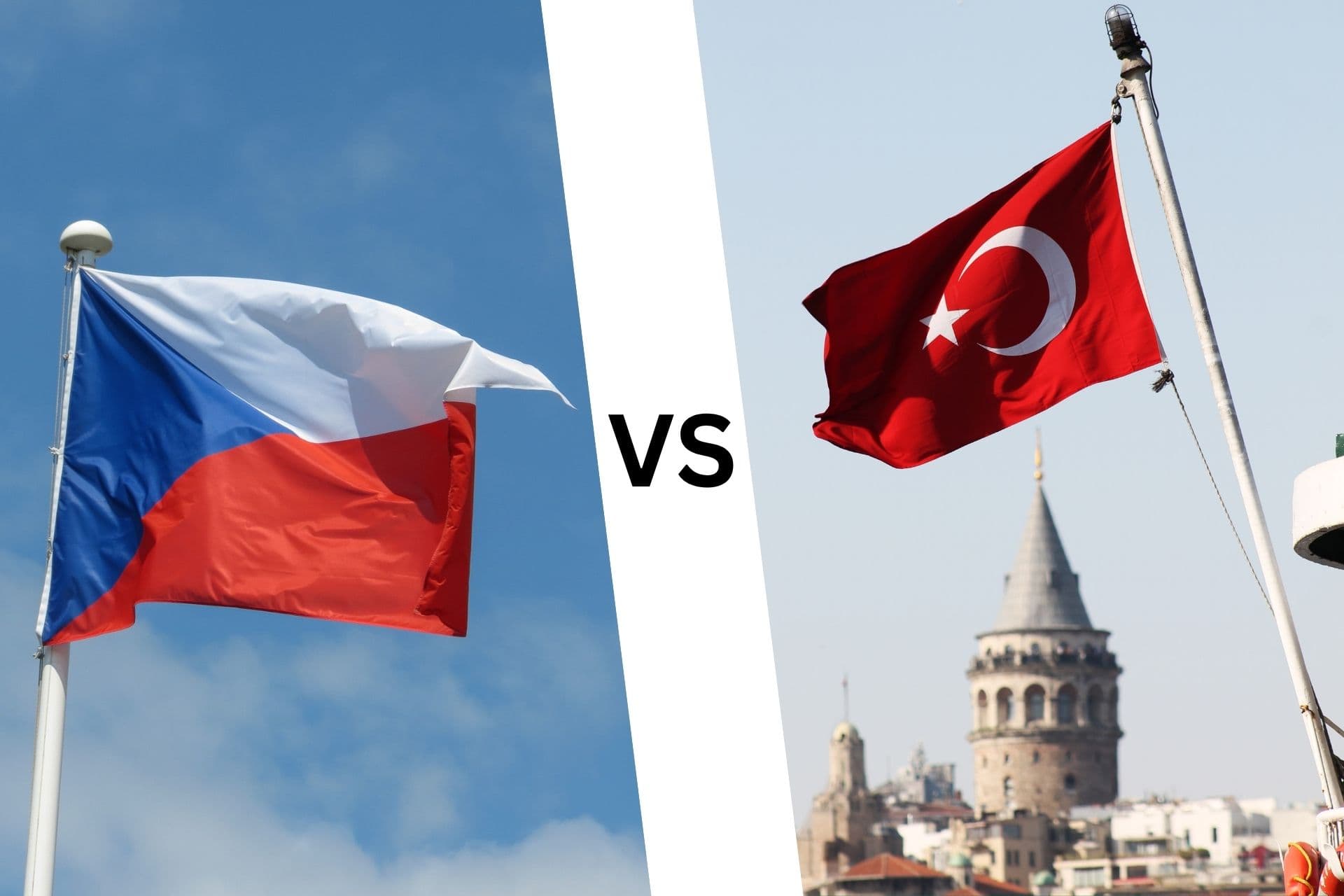
| Criteria | Czech Republic | UK | Turkey | Germany |
|---|---|---|---|---|
| Medical training | 6 + 5 years | 5 + 7 years | 6 + 4 years | 6 + 5 years |
| EU regulation | Yes | No (post-Brexit) | No | Yes |
| FEBO certification | Common | Less common | Rare | Common |
| Avg. procedures/year | 1,500–3,000 | 500–1,500 | Varies widely | 800–2,000 |
| Technology level | Latest generation | Latest generation | Mixed | Latest generation |
| Cost (both eyes, RLE) | From €2,980 | From £7,500 | From €2,500 | From €7,000 |
| English fluency | Excellent | Native | Variable | Good |
Prague: The Eye Surgery Capital of Central Europe
Prague is not just a beautiful city for a weekend break — it has quietly established itself as one of Europe's most important centres for eye surgery. The city is home to several internationally accredited ophthalmology clinics, two major university hospitals with dedicated eye departments, and a cluster of private centres that attract patients from across the continent.
The combination of world-class surgeons, cutting-edge technology, EU regulation, and significantly lower costs has made Prague a rational choice for thousands of international patients every year. It is not about "cheap surgery" — it is about accessing the same quality at a fraction of the price, in a city that is just a two-hour flight from most European capitals.
Frequently Asked Questions
Are Czech eye surgeons really as qualified as those in the UK or Germany?+
Yes. Czech ophthalmologists complete a minimum of 11 years of medical education and specialist training — comparable to the UK (12 years) and Germany (11 years). Many also hold FEBO certification from the European Board of Ophthalmology, which is a pan-European gold standard.
What technology do Prague eye clinics use?+
Leading Prague clinics use the same technology as top centres in London, Munich and Boston — including the Zeiss VisuMax 800 for ReLEx SMILE, Alcon LenSx for femto-cataract surgery, and the latest trifocal and EDOF intraocular lenses from Alcon, Zeiss and Johnson & Johnson.
Is eye surgery in the Czech Republic safe for international patients?+
The Czech Republic is a full EU member state, meaning its healthcare system is regulated by the same European standards as Germany, France or the Netherlands. Clinics are inspected by the Czech Ministry of Health, and all medical devices must carry CE certification.
Why is eye surgery so much cheaper in Prague than in the UK?+
The lower cost is primarily due to lower operational overheads — rent, staff costs and administrative expenses are significantly lower in the Czech Republic. The technology, implants and surgical techniques are identical. You are not getting a cheaper product — you are getting the same product at a lower price point.
Do Czech eye surgeons speak English?+
At international-facing clinics in Prague, yes. Most surgeons at top clinics speak fluent English, and many also speak German. Patient coordinators and support staff are typically multilingual.
How many eye surgeries does the Czech Republic perform each year?+
Approximately 120,000 or more per year, including laser eye surgery, lens replacement (RLE), cataract surgery and vitreoretinal procedures. Individual surgeons at leading Prague clinics perform 1,500–3,000 procedures annually.
Ready to find out if you qualify?
Send us your details for a free online consultation. Our English-speaking team will respond within 24 hours.